
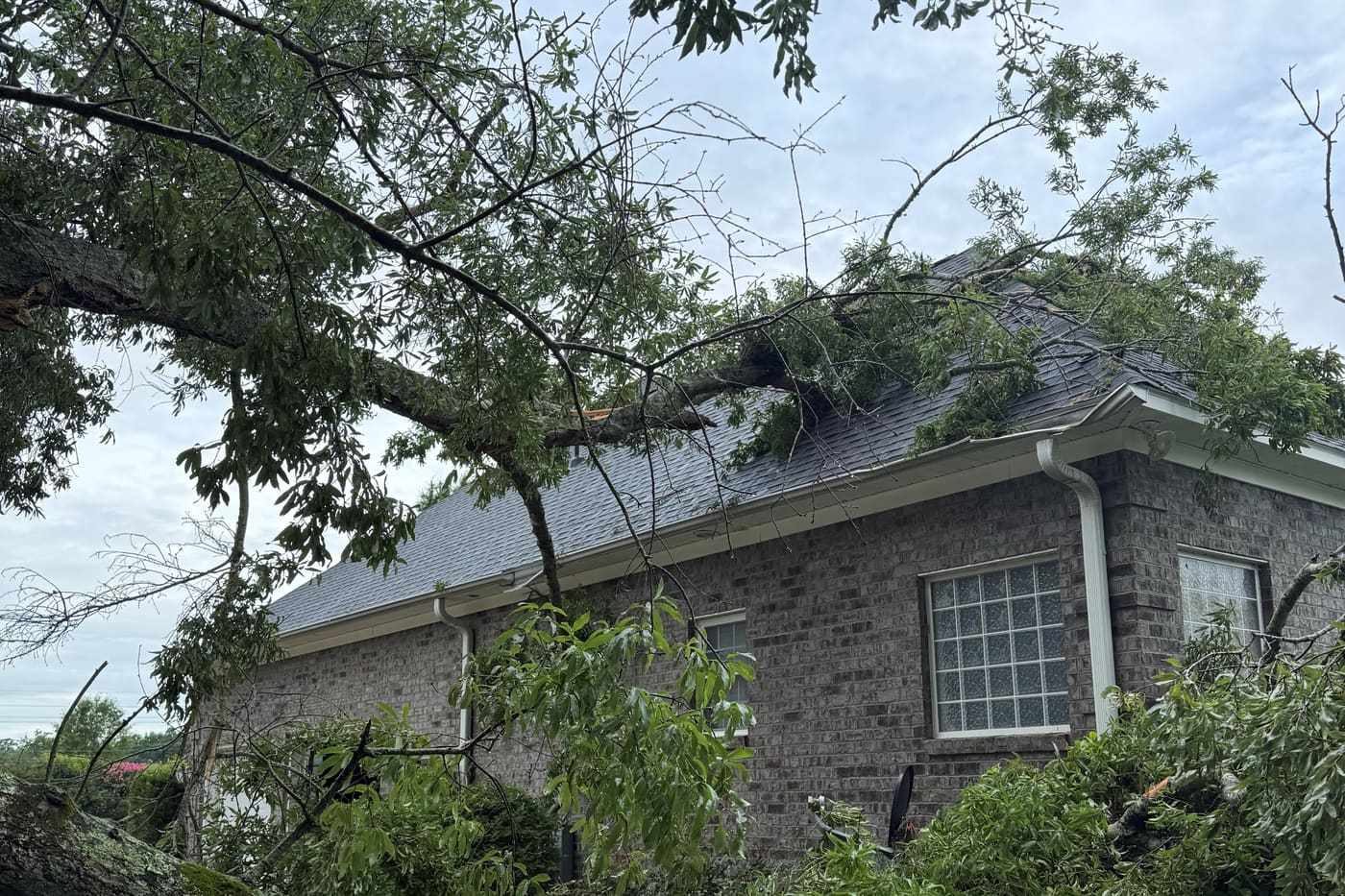
Which Trees Fall First in a Hurricane?
Some of the most common trees in eastern North Carolina yards are also the ones most likely to break or blow over. Here is what the research says, and what matters even more than the species.
By Pamlico Tree Care · Grantsboro, NC · October 2026
The short answer
In studies of urban trees after hurricanes along the Southeast coast, the species that failed most often were water oak, laurel oak, southern red oak, pecan, tulip poplar, Bradford pear and Leyland cypress. The ones that held up best were live oak, bald cypress, southern magnolia, crape myrtle, dogwood and American holly. Loblolly and longleaf pine fall in the lower middle. Species is only part of the story, though. A healthy water oak is often a safer tree than a live oak with a rotten base.
Where the ranking comes from
Researchers at the University of Florida studied what happened to urban trees in nine hurricanes, including Andrew, Opal, Ivan and Dennis, and combined that with surveys of arborists and urban foresters across the region. The result is a wind resistance ranking for the Southeast coastal plain, covering the same trees that fill yards from New Bern to Oriental.
They sorted the common species into four groups.
Highest wind resistance
Live oak, southern magnolia, crape myrtle, flowering dogwood, American holly, bald cypress and pond cypress. Live oak wood is extremely dense, and the open, pyramid shape of a bald cypress lets wind move through it rather than push against it.
Medium-high
Sweetgum and river birch. Sweetgums often grow in groups with roots that connect underground, which researchers think helps them stay standing.
Medium-low
Red maple, sycamore, and the three big southern pines: loblolly, longleaf and slash. Loblolly is the pine most people around here have.
Lowest wind resistance
Water oak, laurel oak, southern red oak, pecan, tulip poplar, Bradford pear and Leyland cypress. Water oak and laurel oak in particular are common shade trees in older eastern North Carolina neighborhoods.
Did you know?
The same study found that the biggest trees lost the most limbs. Trees with trunks between about 39 and 79 inches across lost around 30 percent of their branches, compared with about 12 percent for the smallest trees. Bigger is not always stronger.
What matters more than the species
The researchers were blunt about one thing: no species and no tree is windproof. A list like this tells you the odds for a healthy tree. The condition of your particular tree decides the rest. These are the things we look at before we think about what kind of tree it is:
- Dead wood in the crown. Dead limbs are the first thing a strong wind takes, and they can come down well before the tree itself is in trouble.
- Rot at the base or in the trunk. Mushrooms at the base, soft or hollow wood, or bark falling away are all reasons to have a tree looked at.
- Two trunks splitting from one point. A tight V-shaped fork with bark pinched between the stems is a weak joint, and it is where many large trees split in a storm.
- Damaged roots. Trenching, a new driveway or heavy equipment over the root zone can weaken a tree for years afterward.
- A new lean. A tree that has started leaning, especially with the soil cracked or lifted on the far side, needs attention now.
- Wet ground. Days of rain before a storm make it far easier for a tree to tip over at the roots. Much of the low, flat ground in Craven and Pamlico counties holds water.
If a tree has two or three of these and sits within reach of the house, that is the one to deal with first, whatever the species.
What to do with a lower ranked tree
Do not cut down a healthy tree just because it is on the wrong list. A water oak or a loblolly pine that is sound, well rooted and not leaning over the house may give you decades more of shade. A few things lower the risk:
- Take dead wood out whenever you see it. It can come out in any month.
- Have long, heavy limbs over the roof reduced in late winter, well before hurricane season opens on June 1. Our guide to the best time to trim trees explains why winter is the window.
- Never top a tree to make it "safer." The shoots that grow back from topping cuts are weakly attached and break more easily than the limbs that were removed.
- Keep heavy equipment and trenching off the root zone.
If you are planting, choose from the top of the list. Fall is the best season to plant here, as our fall tree care checklist explains, and a live oak or bald cypress planted with room to grow is a tree your grandchildren will still have.
If a tree is already down or hanging after a storm, start with our storm damage page.
Common questions
What trees are most likely to fall in a hurricane?expand_more
In research on urban trees after nine Southeast hurricanes, the species with the lowest wind resistance were water oak, laurel oak, southern red oak, pecan, tulip poplar, Bradford pear and Leyland cypress. A tree in poor condition, with rot, dead wood or damaged roots, is at higher risk whatever its species.
What trees are most wind resistant in eastern North Carolina?expand_more
Live oak, southern magnolia, crape myrtle, flowering dogwood, American holly, bald cypress and pond cypress ranked highest for wind resistance in University of Florida research covering the Southeast coastal plain. Sweetgum and river birch ranked next.
Are pine trees dangerous in a hurricane?expand_more
Loblolly, longleaf and slash pines rank in the medium-low group for wind resistance. They are not the weakest trees, but tall pines close to a house are worth checking for dead tops, beetle damage, root damage and lean before storm season.
Should I cut down trees near my house before hurricane season?expand_more
Not automatically. A healthy, well rooted tree is often best kept. Remove dead wood, have heavy limbs over the roof reduced in late winter, and have any tree with rot, a new lean or root damage looked at. Removal is for trees that cannot be made reasonably safe.
Do bigger trees hold up better in storms?expand_more
Not necessarily. In the University of Florida hurricane research, the largest trees lost about 30 percent of their branches, compared with about 12 percent for the smallest trees.
Want to know which of your trees to worry about?
We have worked across Craven and Pamlico counties since 2000, from Grantsboro. Jon looks at the trees himself before anyone quotes a number, and he will tell you which ones are fine and which ones need work before next season.
If you already know what you need, start with trimming and pruning, tree removal or stump grinding. More guides are on our blog.
Sources: University of Florida IFAS Extension, Selecting Coastal Plain Species for Wind Resistance (Duryea and Kampf) and related hurricane recovery publications; National Hurricane Center on Atlantic hurricane season dates; NC Cooperative Extension on fall planting.
Request an Estimate
Serving Craven and Pamlico counties. No pressure, no obligation.
Worried about a tree before the next storm?
Call and you will get Jon. He will come look at it, give you a written estimate, and tell you honestly if it can wait.
call(252) 745-7232Office Mon–Thu 7am–5pm, Fri 7am–12pm · Jon answers the phone outside those hours