
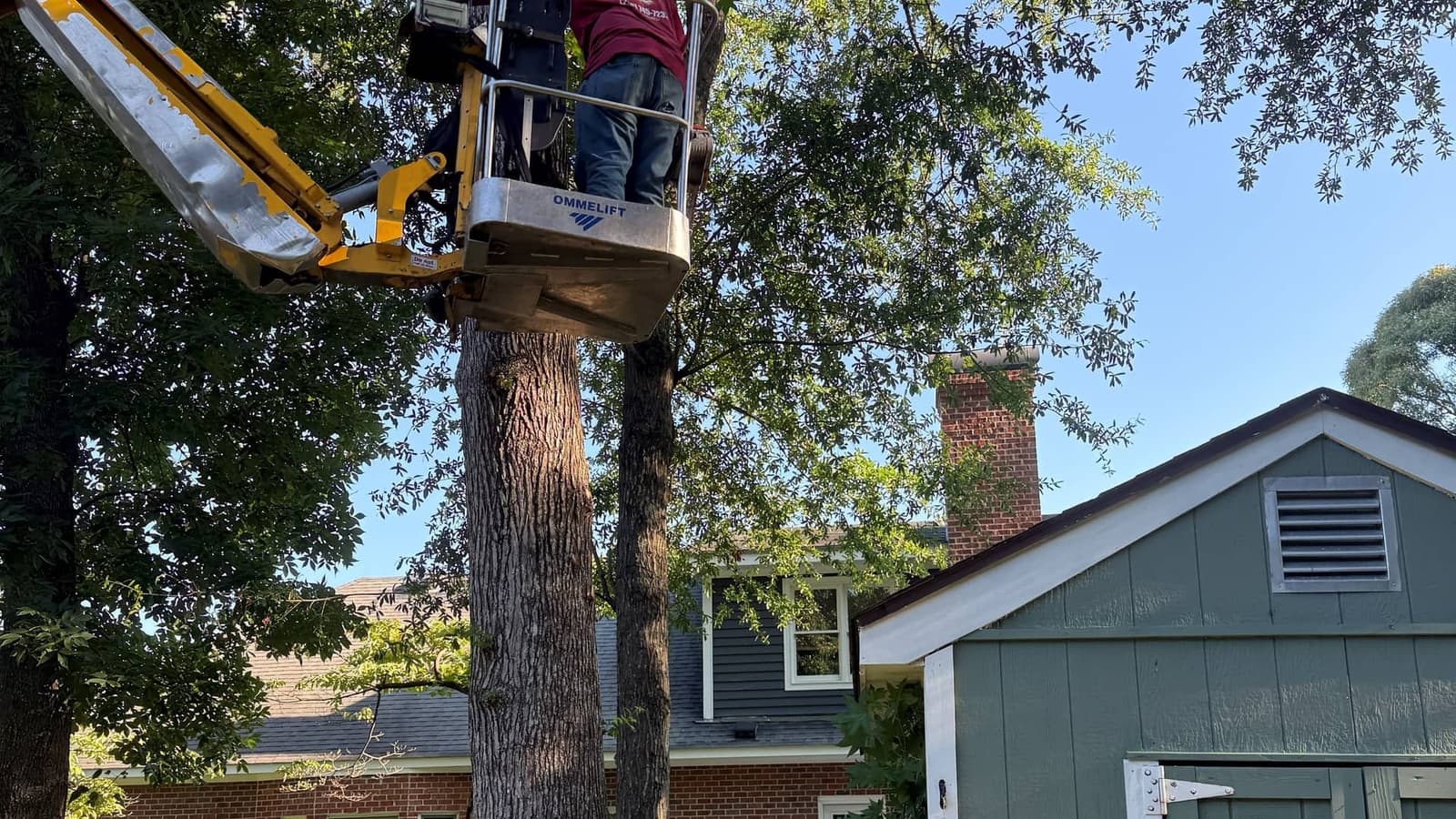
Tree Trimming & Pruning in New Bern & Eastern NC
Clearance off roofs and lines, weight out of long limbs, and dead wood out of the canopy. Cut so the tree keeps its shape and its health, which is not the same as cutting it back.
Jon looks at the tree himself, tells you what it actually needs, and puts the price in writing.
Four different jobs, all called trimming
Almost everybody who calls says they want a tree trimmed. What they actually need is usually one of four things, and they cost different amounts and do different jobs. Knowing which one you are asking for is most of the battle.
Deadwooding
Taking the dead limbs out and leaving everything living. Most of what makes a big tree feel dangerous is dead material sitting up in the canopy waiting for a windy night. This is the cheapest of the four and often the only one actually needed.
Crown raising, or clearance
Lifting the bottom of the canopy: limbs off the roof, off the service line, above the driveway so a truck can get under. This is the one most people mean when they say a tree is too close to the house.
Crown reduction
Shortening long limbs back to a sound lateral branch to take weight and wind sail out of a tree without changing its shape. This is what you want on a big oak reaching over the house. It is skilled work and it is not the same as cutting the top off.
Crown thinning
Selectively removing some interior growth so wind passes through rather than pushing the whole canopy like a sail. Done lightly it helps. Done heavily it strips the tree and does more harm than good, which is why it is the one most often overdone.
Topping is not trimming
Topping means cutting limbs back to stubs, with no regard for where the next branch is. It is quick, it is cheap to do, and it is the single most damaging thing that gets done to trees around here.
A topped tree responds by throwing out a mass of fast, weakly attached shoots from around the cuts. Within a few years the tree is taller than it was, carrying a denser canopy on attachments that are far weaker than the limbs you removed. Meanwhile the open stubs cannot seal properly and let decay into the trunk. You have paid to make the tree both more dangerous and less healthy, and it usually looks wrong for the rest of its life.
If you want a tree smaller, the answer is a crown reduction done to proper cuts. If somebody quotes you topping on a tree worth keeping, that is a good reason to get another quote. We will not do it.
Clearance from the roof and the lines
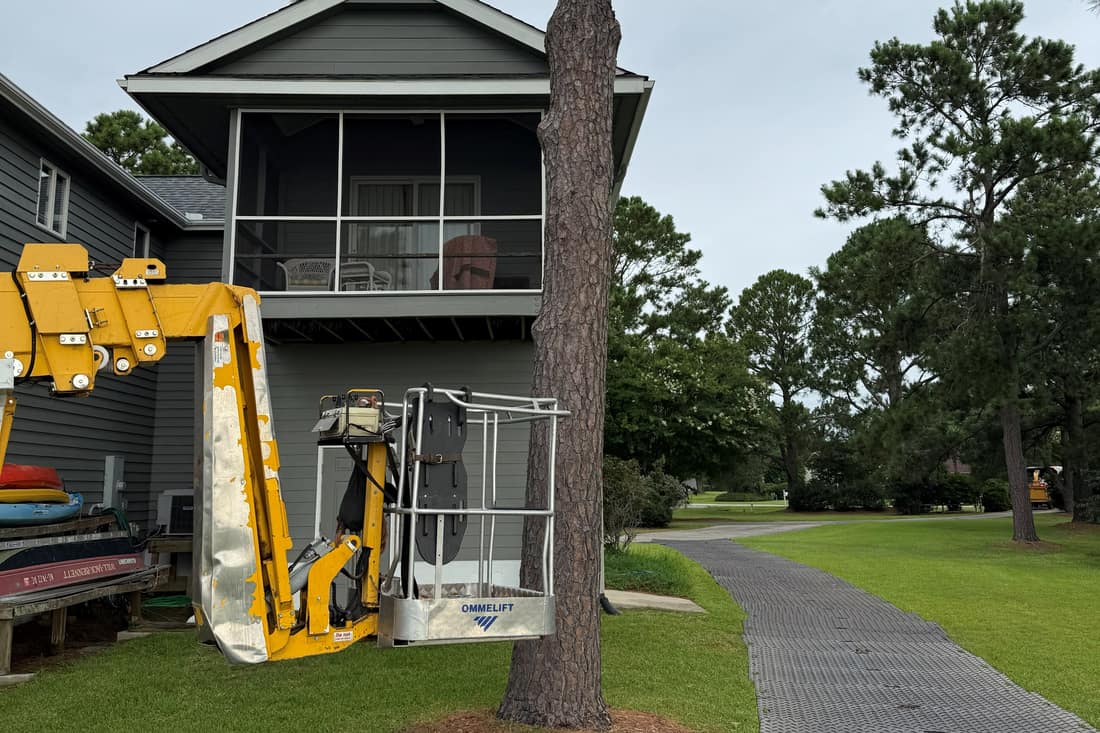
Limbs resting on a roof wear the shingles every time the wind moves them, hold moisture against the surface, and give squirrels a bridge into your soffits. Getting a few feet of clearance solves all three and is one of the cheapest pieces of tree work you can buy.
Around here the access is usually the hard part rather than the cutting, the same as it is on a removal. A tracked lift will fit through a garden gate and reach ninety feet, which is how we work back gardens where there is no room for a bucket truck at all.
On power lines: if a limb is touching the service drop to your house, call your electric provider first. We do not work on energized lines, and neither should anyone who knocks on your door offering to.
When to have it done
You can take dead wood out at any time of year, and anything genuinely hazardous should not wait for a season. Beyond that, timing does matter:
Before hurricane season, not during it
Reducing weight and wind sail is worth doing in late winter or early spring, while there is time to schedule it properly. Once a named storm is in the forecast every tree company in the county is booked.
Structural work in the dormant season
Winter, when the leaves are off, is the easiest time to see a tree's structure and the gentlest time to take a meaningful amount off it.
Go easy in the spring flush
A tree pushing new growth has spent its stored energy doing it. Heavy pruning right then is the hardest on it. Light clearance work is fine.
Not all at once
Taking a quarter or more of a living canopy off in one go stresses a tree badly. A big reduction is better done across two visits a year or two apart, and we will say so rather than sell you the lot in one day.
How often depends entirely on the tree. Fast growing water oaks and sweetgums near a roof might want looking at every three to five years. A settled live oak may go a decade between visits.
What it costs
Trimming is priced on time and access rather than on the tree, so the same job on two different properties can come out quite differently. What moves it:
- How much is coming off. Deadwooding a canopy is a fraction of a full reduction on the same tree.
- How we reach it. A tree that can be climbed is cheaper than one that needs a lift, and a lift needs somewhere to set up.
- Where the pieces can go. Over a lawn is quick. Over a conservatory, a pool or a neighbor's fence means roping every piece down.
- How much brush comes out. Chipping and hauling is part of the job and a big reduction makes a lot of it.
- Height and species. Reaching into a mature pine takes longer than a low crown you can work from the ground.
Find out what your tree actually needs
Plenty of trees people expect to pay a fortune on turn out to need an afternoon of deadwooding. Jon will tell you which yours is, free, and in writing.
When trimming saves you a removal
A tree that worries you is not automatically a tree that has to go. A heavy limb reaching over the bedroom can be reduced. A co-dominant stem with a weak union can be cabled and braced. A canopy full of dead wood can be cleaned out in a day, and the tree that looked frightening stops looking frightening.
The ones that genuinely need to come out are a different picture: a hollow or soft base, a dead top over a structure, or a fresh lean with the soil lifting on the far side of the root plate. If that is what you have, it is on our tree removal page.
If you are not sure which one your tree is, that is exactly what the free visit is for. We would rather keep it standing.
Request an Estimate
Tell us which tree and what is bothering you about it. No pressure, no obligation.
Free written estimate
Twenty six years in eastern North Carolina, BBB accredited with an A+ rating, fully insured, and voted Best Tree Removal by Sun Journal readers two years running.
Office Mon–Thu 7am–5pm, Fri 7am–12pm · Jon answers the phone outside those hours